FlowID: IoT Smart Water Filter System

Introduction
This case study explores the development of a smart reverse osmosis (RO) water filtration system designed to enhance monitoring and management for both residential and industrial users. By integrating Internet of Things (IoT) technology, mobile applications, and cloud services, the system addresses common challenges in traditional water filtration, offering real-time insights and efficient maintenance.
Technical Description
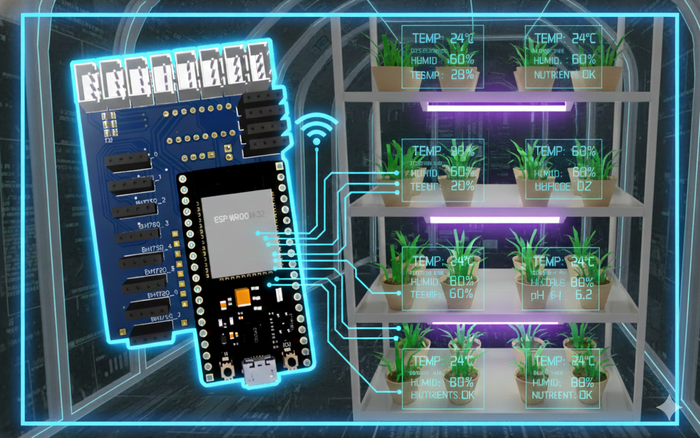
The system features a compact controller unit built around an ESP32 microcontroller, known for its low power consumption and integrated Wi-Fi and Bluetooth capabilities. It includes:
- Sensors: A flow meter measures water usage to track filter lifespan, while an EC (Electrical Conductivity) meter assesses water quality to ensure purity.
- Connectivity: Bluetooth Low Energy (BLE) enables short-range communication with mobile devices, and Wi-Fi facilitates data transmission to the cloud.
- Mobile Application: Developed using React Native, the cross-platform app provides real-time water quality data, filter status, and maintenance alerts.
- Cloud Service: Powered by NestJS for backend processing and MongoDB for scalable data storage, the cloud platform offers centralized management and reporting for multiple units.
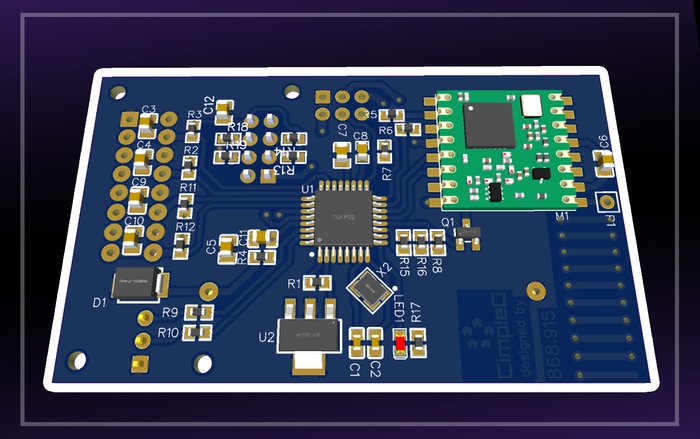
The development process involved custom PCB design, embedded C programming, and hardware integration to ensure seamless operation across components.
What the System Delivers
- Water quality monitoring: users see water purity readings in real time.
- Proactive filter management: notifications warn before a filter degrades, so it is replaced on time.
- Central management for companies: one dashboard covers every device, which reduces maintenance visits.
Engineering at a glance
- At least 3,518 engineering hours from 8 engineers over about 3 years (August 2021 to August 2024). The project history reaches back to 2018.
- Server repository: 2,397 commits (July 2018 to August 2024), release 0.8.30. Web dashboard: 1,006 commits. Mobile app: 429 commits. Firmware: 253 commits, release 1.0.28.
- Deep-sleep mode and a JSON sending queue on the device.
- External hardware pulse counter for water flow. Power from 4 or 8 batteries, or 24-48 V DC.
- MQTT through Mosquitto with PSK encryption. One BLE characteristic carries one JSON structure, unified across device models.
- Push notifications, a React Native upgrade to 0.74, an acceptance demo in August 2024, then documentation and server transfer.
How We Built the Smart RO-Water Filtration System
The device, the mobile apps, the cloud platform and the decisions behind each follow.
Introduction
The project involves creating a smart reverse osmosis (RO) water filtration system with IoT capabilities, mobile applications, and cloud services, targeting both consumer and corporate users. The technology stack includes ESP32, BLE, React Native, NestJS, and MongoDB, suggesting a focus on energy-efficient hardware, cross-platform mobile development, and scalable cloud solutions.
Project Information
The system is designed for real-time monitoring and management, likely integrated with existing RO filtration units to enhance functionality. The project scope includes hardware design, mobile app development, and cloud service implementation, with a focus on improving water quality and operational efficiency.
Problem Statement
Traditional water filtration systems often lack real-time monitoring capabilities, leading to potential issues such as degraded water quality due to untimely filter replacements and inefficient resource usage. For users, this means uncertainty about water safety, while for companies managing multiple units, it results in increased maintenance costs and operational inefficiencies.
Goals
The project objectives were to:
- Implement real-time water quality monitoring using sensors.
- Track filter usage based on actual water flow and quality data for precise replacement intervals.
- Provide notifications via a mobile app to ensure timely maintenance.
- Design a scalable cloud service for companies to manage fleets of filtration systems efficiently.
Technical Approach
The development leveraged a comprehensive technology stack, detailed as follows:
Hardware and Embedded Systems
- Microcontroller: ESP32 was selected for its low power consumption and integrated Wi-Fi and Bluetooth capabilities, ensuring energy-efficient operation.
- Sensors: Included a flow meter to measure water usage and an EC (Electrical Conductivity) meter to assess water quality, critical for maintaining purity.
- Connectivity: Utilized Bluetooth Low Energy (BLE) for short-range data transmission to mobile devices and Wi-Fi for cloud connectivity, enhancing flexibility.

Mobile Application
- Developed using React Native, the mobile app offers a cross-platform solution for both iOS and Android users. It provides features such as:
- Real-time water quality indicators.
- Notifications for filter replacements.
- User management tools for consumers.
- For companies, a dashboard to oversee multiple units, view reports, and schedule maintenance.
Cloud Service and Backend
- NestJS: Used for building the backend, providing a scalable and efficient server-side framework for handling API requests and data processing.
- MongoDB: Chosen for data storage, offering flexibility in handling unstructured data from multiple devices, supporting scalability for corporate clients.
Challenges and Solutions
The development process encountered several challenges, each addressed through strategic solutions:
-
Integrating Multiple Components:
- Challenge: Ensuring seamless integration of the ESP32, flow meter, EC meter, and wireless communication modules.
- Solution: Custom PCB design and rigorous testing of component interactions to ensure compatibility and reliability.
-
Sensor Accuracy:
- Challenge: Maintaining accurate measurements from flow and EC meters, crucial for reliable water quality and usage data.
- Solution: Regular calibration of sensors and validation against known standards to ensure precision.
-
Power Efficiency:
- Challenge: Minimizing power consumption for continuous operation, especially important for home users.
- Solution: Optimizing ESP32 power modes and scheduling sensor readings to reduce energy use without compromising functionality.
-
Scalability for Corporate Use:
- Challenge: Designing the cloud service to handle a large number of devices and users, particularly for companies managing multiple filtration units.
- Solution: Implementing a scalable architecture with load balancing and efficient data handling in MongoDB, ensuring performance under high demand.
Solution Overview
The smart RO-water filtration system comprises:
- A compact controller unit, likely integrated with the filtration system, featuring the ESP32, flow meter, and EC meter.
- Wireless connectivity options (BLE and Wi-Fi) to transmit data to the cloud.
- A mobile app, built with React Native, offering user-friendly interfaces for consumers to monitor water quality and receive alerts, and for companies to manage fleets.
- A cloud-based platform, powered by NestJS and MongoDB, for data storage, analysis, and management, providing real-time insights and historical reports.
What the System Delivers
- Water quality monitoring: real-time visibility into water purity.
- Proactive filter management: alerts before a filter degrades, which reduces waste and keeps water quality stable.
- Central management for companies: one place to manage all devices, which reduces maintenance visits.
Conclusion
This case study exemplifies the potential of integrating IoT, mobile, and cloud technologies to enhance traditional water filtration systems. By addressing critical needs such as real-time monitoring and efficient management, the project not only improves user experience for consumers but also offers scalable solutions for corporate clients, demonstrating the transformative impact of smart technology.
Plan a device like this
Tell us about your device, sensors and mobile app. We will scope the firmware, cloud and app work with you. Contact us.