
PortableISP
- For
- Firmware engineers on factory floors and at client sites.
- Built
- A working prototype and a 16-channel multi-flash adapter built in 2024.
- Next
- A distribution or OEM partner for a production run.
- Last activity
- Nov 2024

Firmware engineers waste time looking for a PC with a USB port and the right cable. On a factory floor or at a client site, that delay adds up.
PortableISP removes the PC. It’s a pocket device built around an ESP-WROOM-32, a 2.2" color TFT, and a 5-way keypad. It flashes and backs up ESP32 and ESP8266 firmware over UART, reads AVR chips via ICSP, and pulls SWD backups from ARM/STM32 targets straight to the SD card — no laptop in the loop.
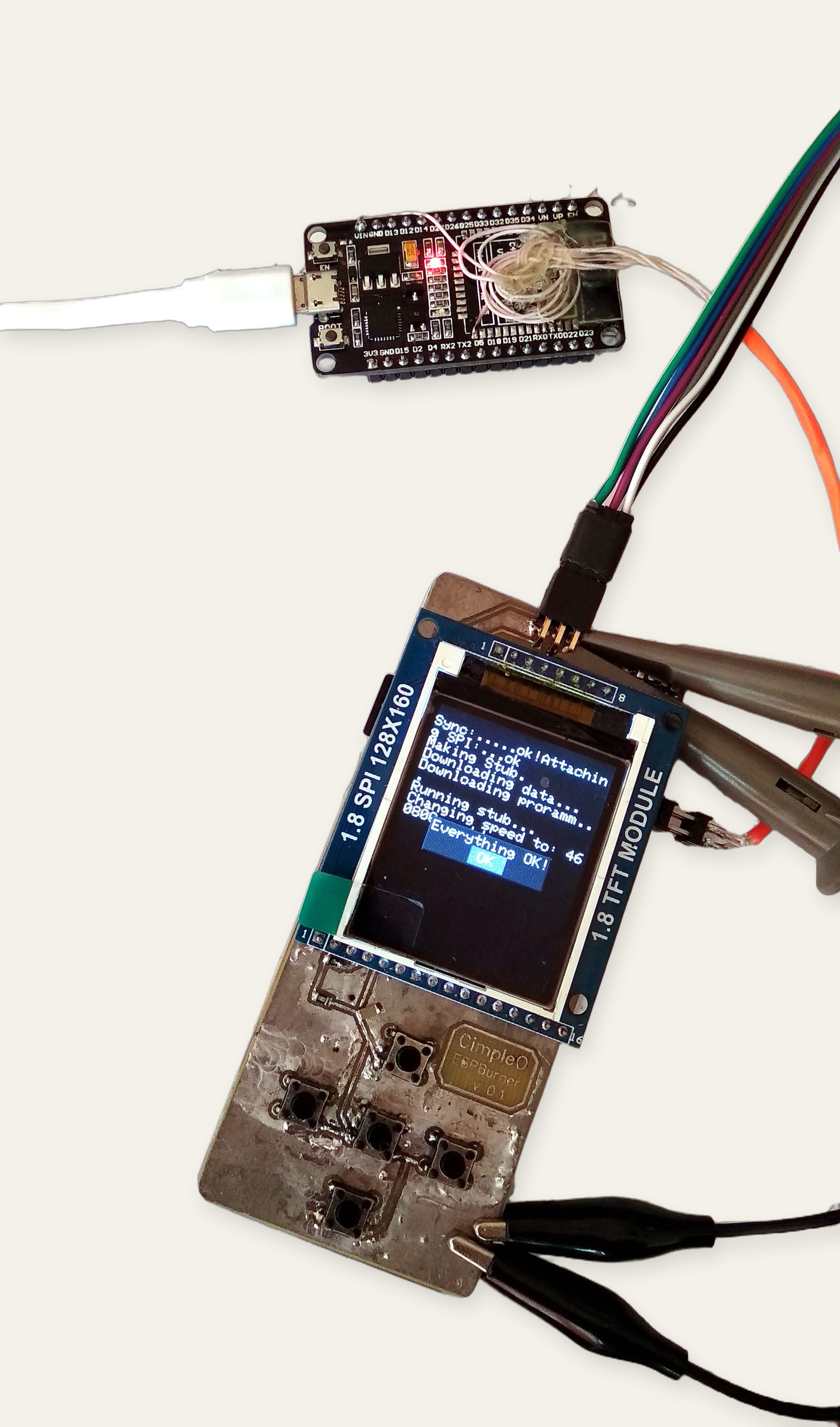
The first working build, in June 2019, was a bare ESP32 dev board hand-wired to a 1.8" SPI TFT breakout — hand-labeled “EspBurner v0.1.” It flashed a test sketch and printed the sync sequence to its own screen. We bolted on an SD card reader for firmware storage, dropped it days later for unreliable reads, and built a file browser instead.
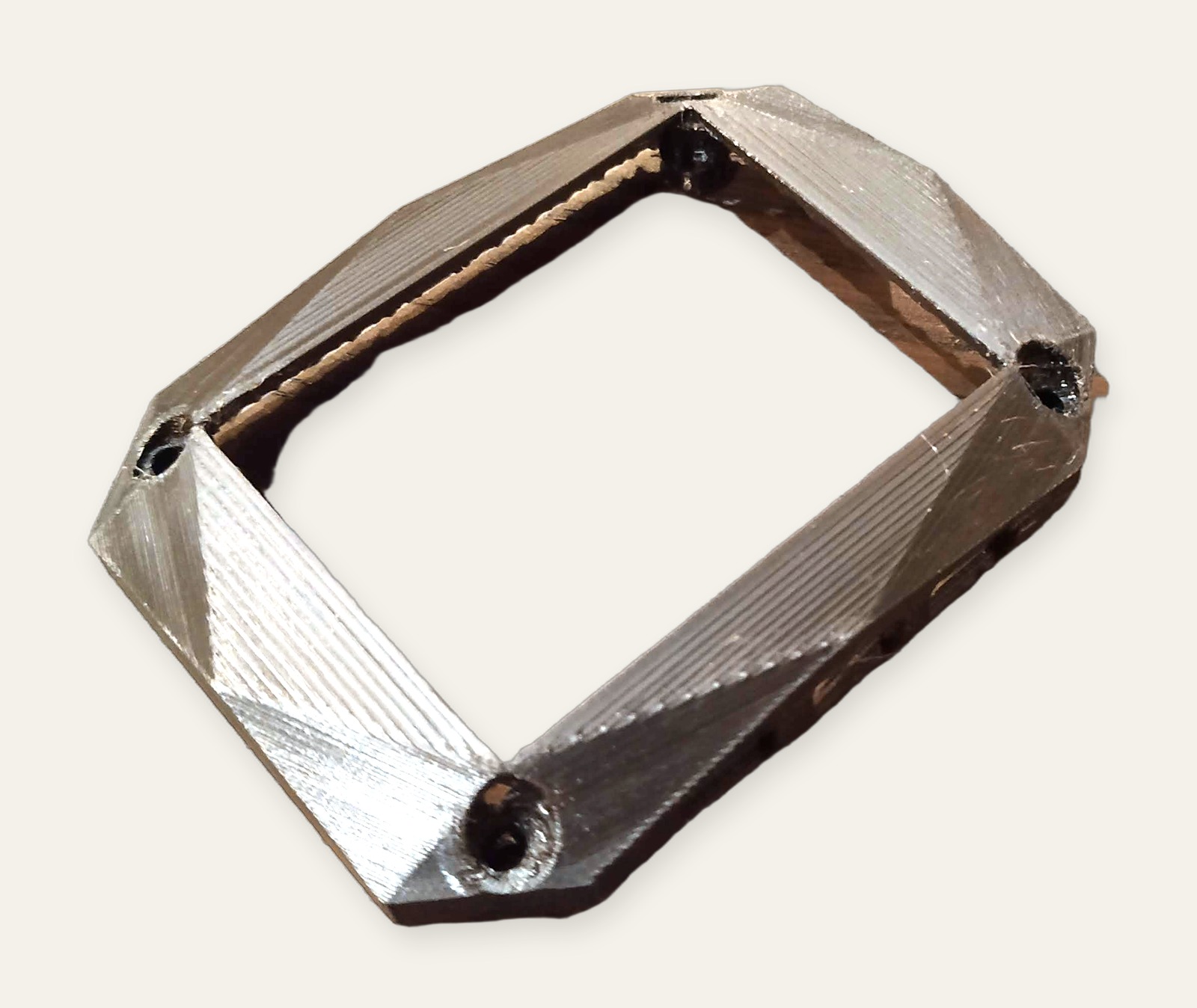
Fitting that board into a pocket-sized shell took most of 2019: a plain printed box first, then an open frame to check screen and button placement before committing to a closed one.
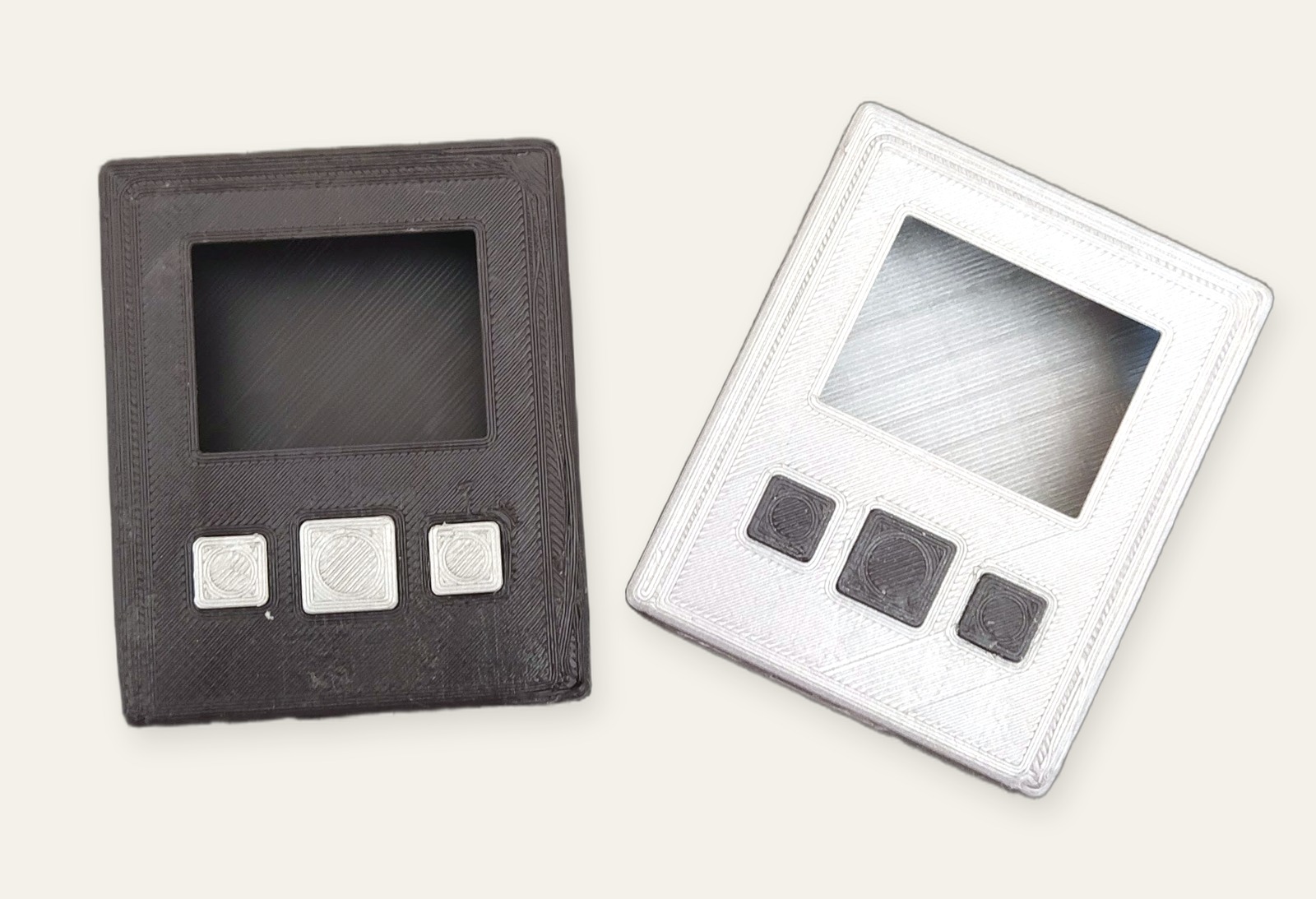
Through 2020 we cut a dedicated PCB, tried two front-panel layouts — buttons below the screen and buttons beside it — and settled on buttons-below, printed and compared in both black and white-grey plastic. We also tried an off-the-shelf TTGO T4 module wired through a custom carrier board, a cheaper path we kept exploring alongside the custom PCB.
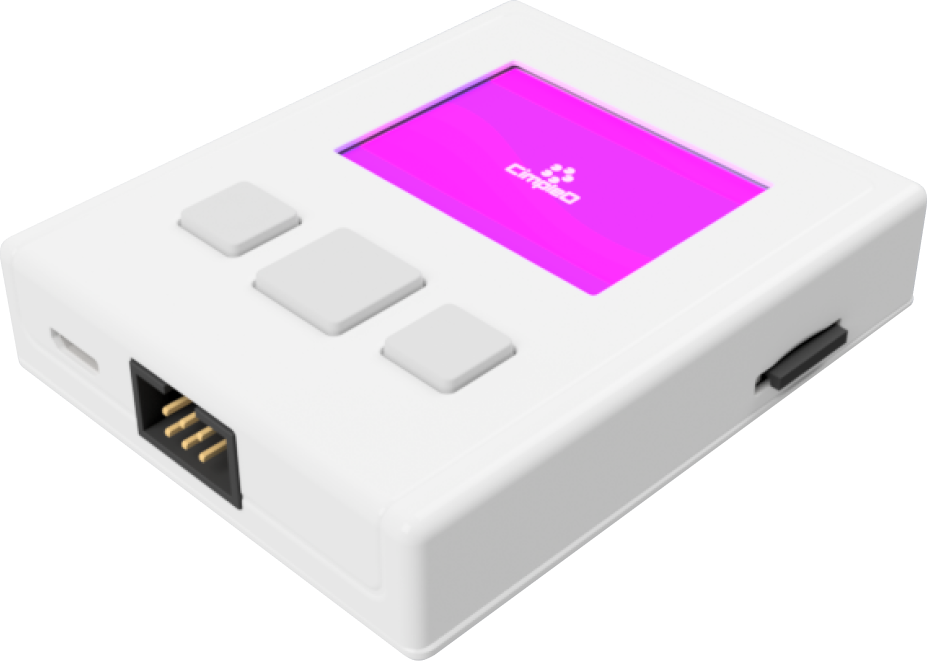
The pink-accented case with the color TFT front and center shipped as “V1” that December. The main board went through three more EasyEDA layout revisions since, landing on the current black enclosure. A separate button-panel board breaks the keypad out for enclosures where the main board sits deeper inside. An MCP73831 handles LiPo charging.
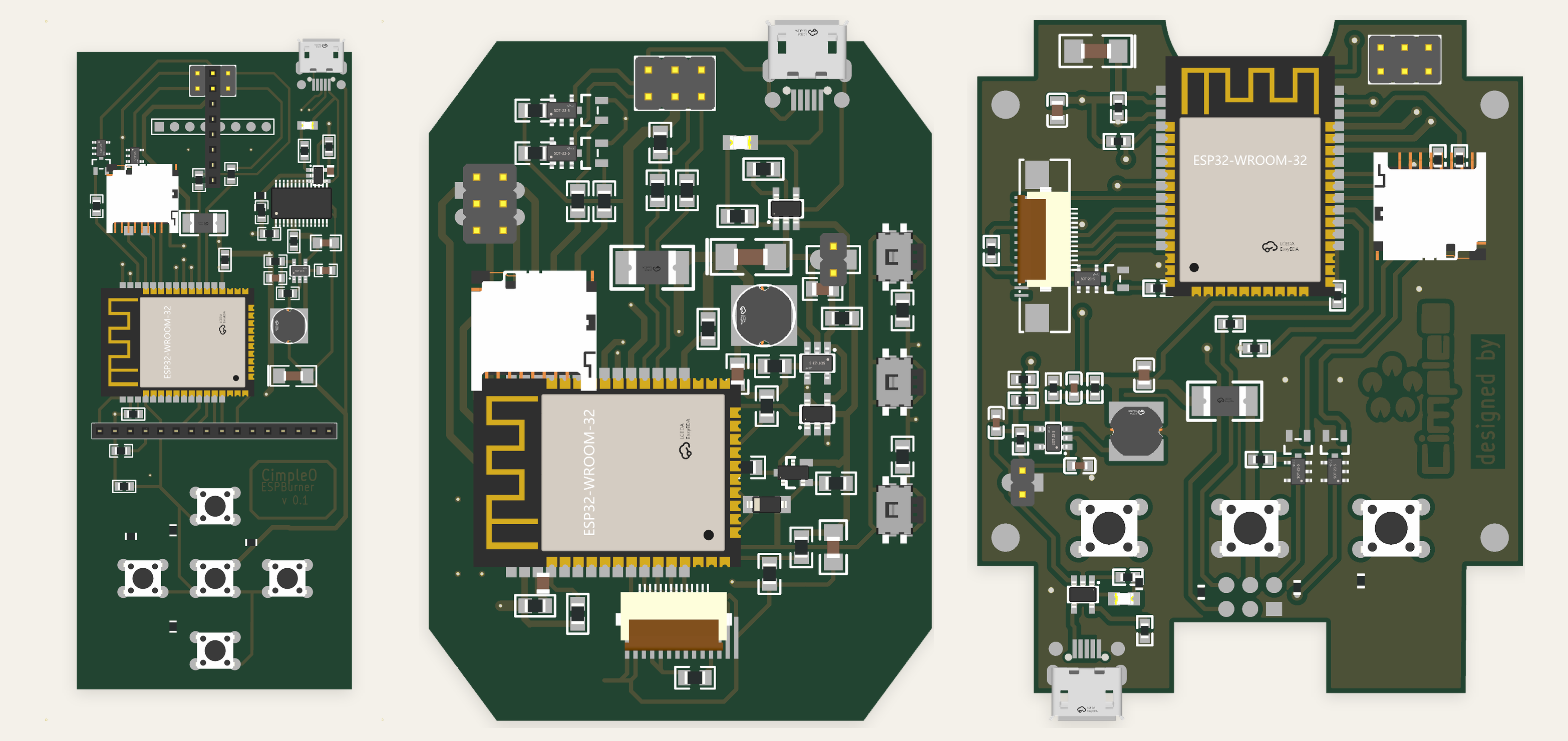
We priced contract manufacturing in China, checked EasyEDA’s own store as a sales channel, and looked at US logistics — it’s still a working prototype, not yet in production. Against bench programmers, two things hold up: firmware upload over WiFi, and a live serial monitor on the device itself.
Engineering at a glance
- Stage: prototype, not in production. Engineering work ran until November 2024.
- Effort: about 1,262 engineering hours, six engineers, April 2019 to November 2024.
- Targets: ESP32 and ESP8266 over UART, AVR over ICSP, ARM/STM32 over SWD. Firmware backup runs over ICSP, SWD and UART.
- Clone protection: ESP32 flash encryption plus OTA updates.
- Multi-flash: a 16-channel adapter with its own schematic, DC-DC converter and PCB, built and populated in March 2024.
- Firmware: PlatformIO and the Arduino framework on an ESP32 DOIT devkit target, with a custom
min_spiffspartition table and baud-rate auto-detection.
Need a team that ships hardware, firmware and cloud like this? Talk to us.