
Plumadex

Most bird identification apps send audio to a remote server, which requires network connectivity, introduces latency, and means your recordings leave your device. Plumadex runs inference locally through BirdNET, the open bioacoustics model from Cornell Lab’s K. Lisa Yang Center for Conservation Bioacoustics — no custom model to train, no audio leaving the device.
Tap the mic. The app listens continuously, shows a live input level, and returns species matches with a confidence score in under a second — including multi-species calls, where more than one bird is singing in the same clip. No account required for identification itself; sign up only if you want to keep a history.
6521 species across 7 languages. Common names, taxonomic data, and species profiles are localised into English, Russian, German, French, Spanish, Chinese, and Japanese.
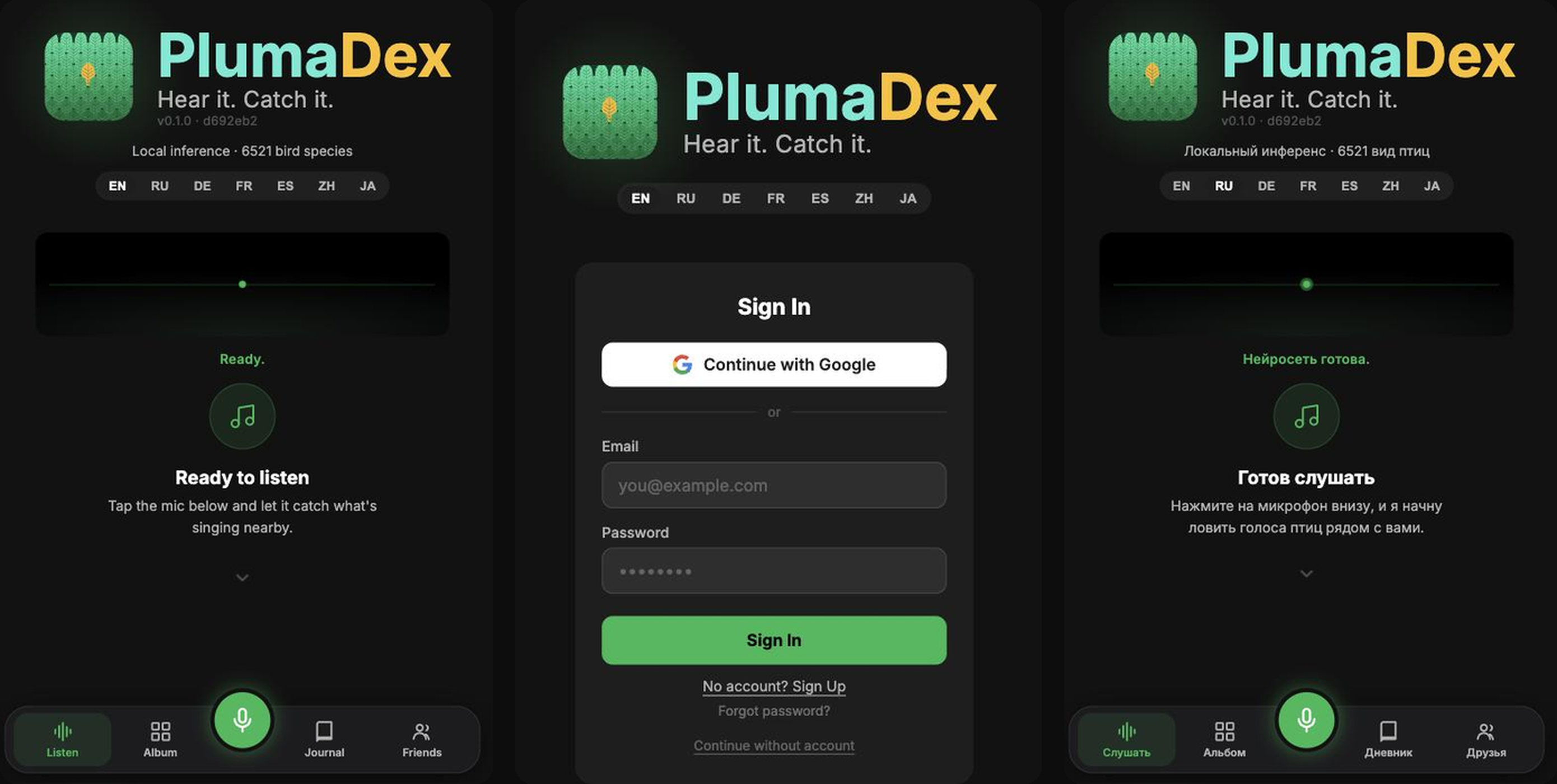
Shipped: local inference with no server round-trip for the identification step; an “Extended detection” mode that keeps listening in the background instead of one clip at a time; a full account system (email/password, Google sign-in, or continue anonymously); and a PWA shell — installable with no app store, works offline after first load, updates silently.
In progress, per the project’s own tracker: the core Listen flow is live, but most of what makes this a Plumadex rather than a bird-sound lookup tool is still being built out. The centerpiece is a Pokédex-style collection mechanic — every confirmed species lands in a personal Dex with a caught/uncaught state, a rarity tier, and a card recording where and when you first heard it. Around that: geotagged sightings on a personal map, regional species lists, migration and seasonality data, and “where to look” hints for rare species nearby; achievements, streaks, seasonal events, and leaderboards tied into the Friends tab; and a fuller onboarding flow with avatar upload, region auto-detection, and Apple Sign-In alongside the Google login that already works.
Plumadex is live and free to use today for its core function — hearing a bird and getting a name. The collection layer is what turns repeat use into a habit, and that’s the part still shipping.