
FieldForce OS

Field-service companies run on paper logs and phone calls. A dispatcher assigns jobs by guessing which crew is closest. A technician’s paperwork is a photo of a clipboard, if it exists at all. Nobody can prove a job was done right until a customer complains.
FieldForce OS closes that gap with three connected pieces: a Flutter app technicians carry in the field, a React console dispatchers run from a desk, and a FastAPI backend that keeps both in sync in real time.
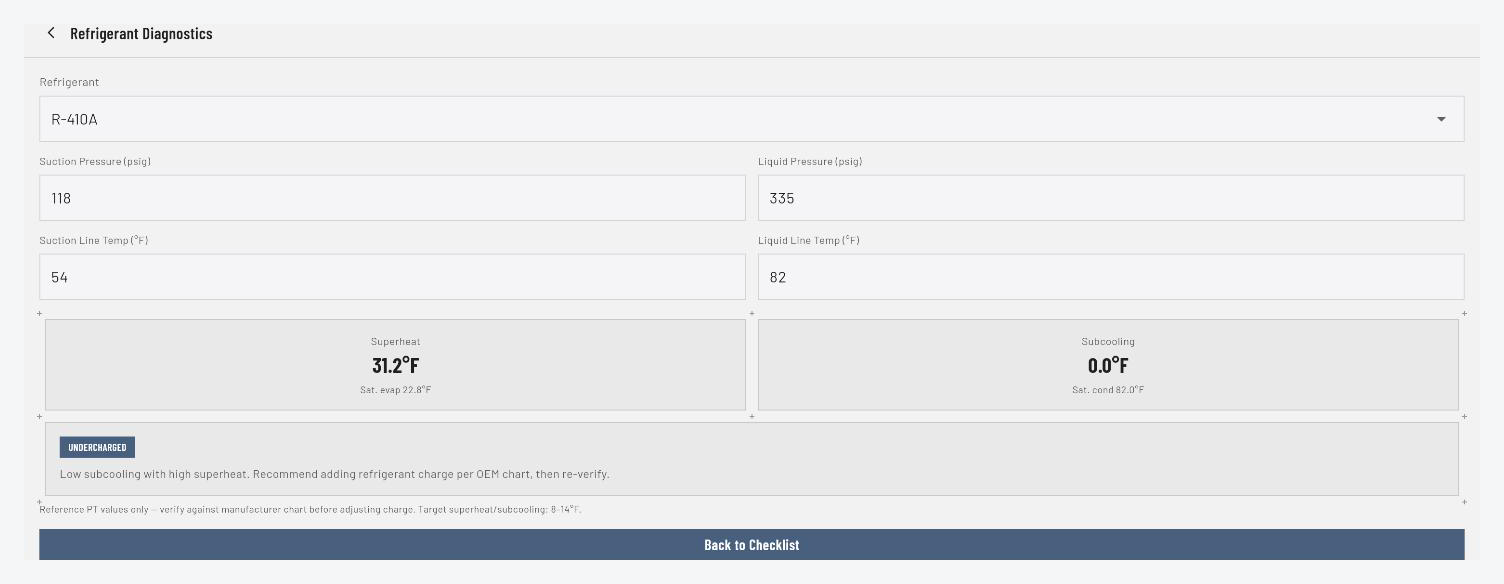
The technician app works offline first: a crew in a basement mechanical room with no signal can still complete a full job. It walks a technician through geofenced arrival detection, a per-job-type checklist, before/after photo capture, and a finger-drawn customer signature. Refrigerant diagnostics run a real pressure/temperature saturation table for R-410A, R-22, and R-454B, computing superheat and subcooling on the spot and flagging undercharge, overcharge, or airflow restriction against manufacturer target ranges. This is real HVAC math, not a placeholder calculator. Every action queues locally and syncs the moment the signal comes back, using an idempotency key so a retried submission never double-books a completed job.
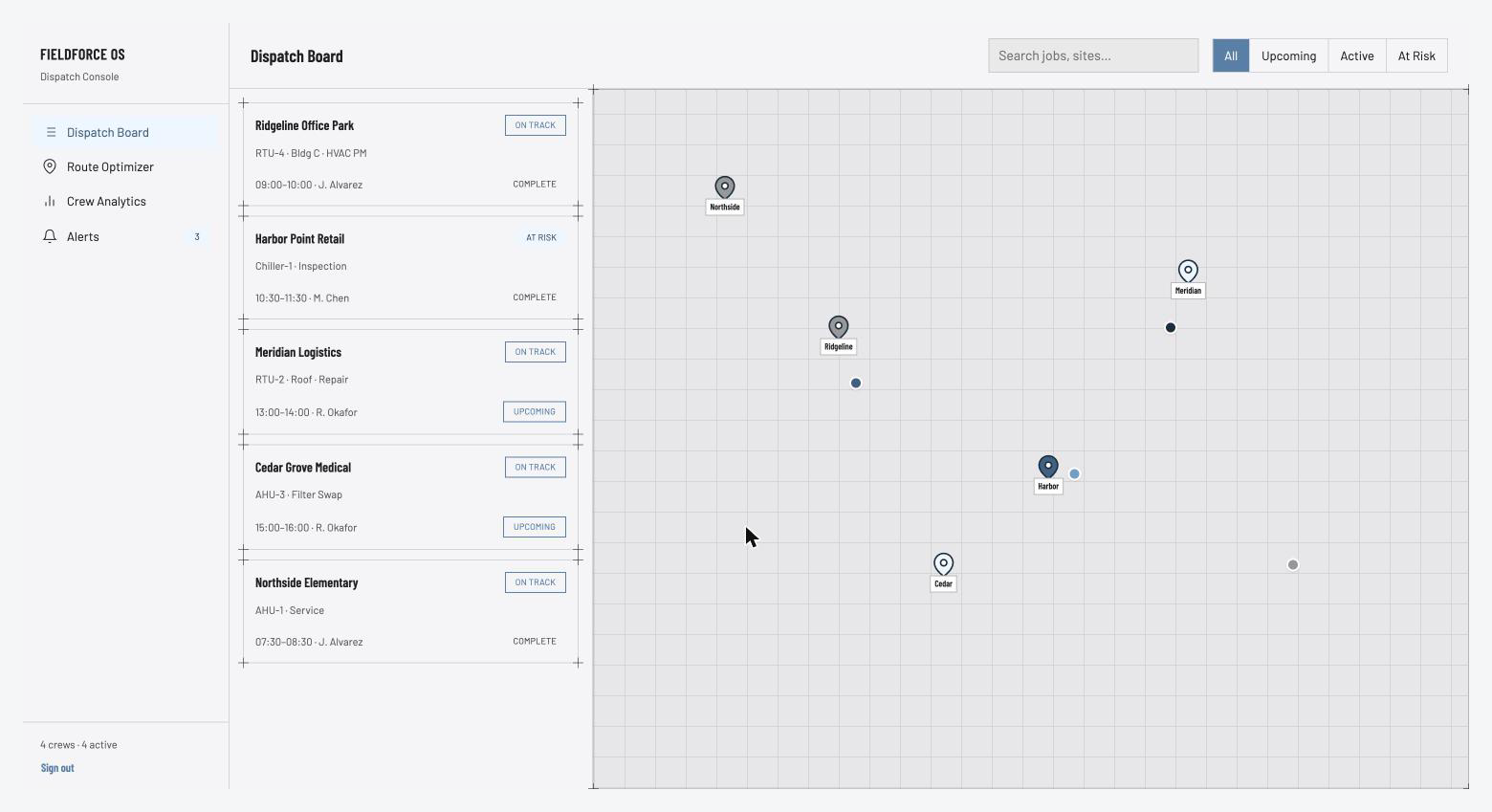
The dispatch console shows every crew and job on a live board: filterable by status, searchable by site, with an SLA-at-risk flag on jobs running past their window. A route optimizer reorders a crew’s stops by drag or by a one-click resort. A checklist item checked, a photo attached, a job submitted: every change a technician makes in the field appears on the dispatcher’s screen over a WebSocket connection, no refresh needed.
Both apps run against the same PostgreSQL-backed API, with JWT auth, role-gated endpoints (a technician can’t touch another crew’s jobs or the dispatcher-only routes), and an audit log on every state change. The whole stack (API, database, and object storage for photos and signatures) comes up with one docker compose up.
FieldForce OS is a working prototype today: every screen above runs against live data, not mockups. We’re scoping it for a pilot with a real HVAC service company next.