Gryadka: Farm-to-Buyer Marketplace App

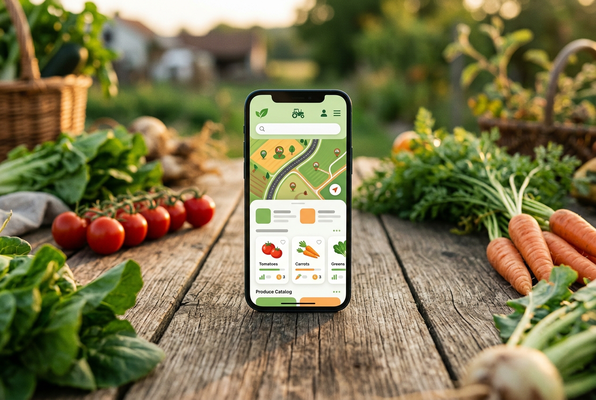
Gryadka connects small farms with buyers directly: growers list their farms and crops, buyers browse and order, and the two sides communicate through in-app chat. CimpleO built the application end to end, then migrated it to Next.js and handed it off with full documentation for the client’s own team to continue.
The Challenge
A two-sided marketplace means two different sets of needs on one codebase. Farmers needed a way to register a farm, list what they grow, track incoming orders, and get notified of activity. Buyers needed to find farms on a map, browse a crop catalog, and place orders without friction. Both sides needed direct communication, so listings didn’t have to cover every question a buyer might have.
The later move to Next.js added a second constraint on top of the feature work: migrate a React application’s routing and rendering model without breaking any of the flows already in production, while also preparing the codebase (TypeScript coverage, API layer, component structure) for a team that hadn’t built it to take over.
What We Built
- Registration and authentication for both farmers and buyers
- Interactive map of registered farms
- Farm detail pages and crop detail pages
- Crop catalog with search
- Order placement and order management
- Shopping cart
- In-app chat between farmers and buyers
- Notification system, separate for buyers and producers
- Producer-side settings and task tracking for crop planting and harvest cycles
- Analytics for producers
- Sidebar navigation and a settings screen for buyer preferences
Delivery
Once the core product was feature-complete, CimpleO migrated the frontend to Next.js and prepared the codebase for handoff: full TypeScript coverage, a documented API integration layer with Axios and interceptors, refactored components, and updated dependencies. The handoff package included full project documentation filed directly in the project’s issue tracker, so the client’s team could pick up development without needing a walkthrough from the original engineers.